Posted on

Why coaching workshops is ALSO for kids ?

As academic and social pressures have increased while skills needed for the future have shifted — making personalised coaching more important to help children learn effectively, stay resilient, and develop broader skills. In Singapore this is amplified by systemic and cultural factors.

Here are some key reasons :

  • High-stakes exams and streaming: PSLE, O‑levels/A‑levels, and streaming decisions make outcomes consequential; targeted coaching helps close gaps and prepare for exam formats.
  • Intense competition and tuition culture: widespread tuition raises expectations for extra support to keep up or excel.
  • Large class sizes and curriculum pace: classroom time can’t always provide one-on-one follow-up; coaching fills that individualized learning need.
  • Emphasis on grades + holistic expectations: schools expect academic results plus co‑curricular achievements and character traits — coaching can address both academics and soft skills.
  • Future skills mismatch: critical thinking, creativity, communication and digital literacy are increasingly valued; coaching can teach these in ways exam-focused classrooms may not.
  • Mental health and resilience: pressure, anxiety and burnout are rising; coaches can teach study strategies, time management, and coping skills.
  • COVID‑era learning gaps and hybrid learning: disruptions widened disparities; targeted remediation and personal attention remain necessary.
  • Parental expectations and investment: parents often want bespoke support that matches their child’s pace, learning style, and aspirations.
  • Inequality and access: coaching can both alleviate and exacerbate gaps — but when offered affordably or in schools/community programs, it helps under-served students catch up.


At OLEA, our mission is to build resilient, growth-mindset learners who thrive academically and emotionally.


Through the Way of The Warrior Kid workshop, here is what kids will work on:

  1. Purpose & Values — Clarify personal values (honor, respect, courage) and set a short-term workshop mission.
  2. Discipline & Routine — Teach simple daily habits: wake-up, exercise, focused study, and bedtime routines.
  3. Respect & Empathy — Practice respectful communication, active listening, and kindness toward peers and adults.
  4. Courage & Confidence — Use graded challenges and role-play to build bravery in small, repeatable steps.
  5. Self-Control & Emotional Regulation — Teach breathing, grounding techniques, and pause-and-plan strategies.
  6. Goal-Setting & Accountability — Set SMART micro-goals, track progress, and use peer/coach check-ins.
  7. Focus & Concentration Skills — Short attention-training exercises (timed focus sprints) and distraction management.
  8. Problem-Solving & Resilience — Teach stepwise problem-solving, learning from mistakes, and bounce-back routines.
  9. Teamwork & Leadership — Cooperative tasks, rotating leadership roles, and debriefs on group dynamics.
  10. Reflection & Habit Reinforcement — Daily reflection, “victory” logs, parent debriefs, and simple home practice plans.

Posted on

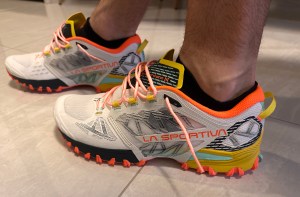
La Sportiva Bushido III : Review


After a year taking on the trails with Saucony Peregrine, I got back to basics with my usual trail running shoes, La Sportiva Bushido.

I’m always all about experiencing new things, but I will make an exception on that one for now as the Peregrine got me so many blisters and blue toes in just a year time.

Short description (better trails.com): Lightweight and nimble, the Bushido III excels on rock with impressive grip and agility and is ideal for those who prefer a fast-moving, low-profile shoe over a more supportive hiker. However, its minimal stability and durability may leave some hikers wanting more.

The La Sportiva Bushido III is best for hikers and trail runners who prioritize agility, grip, and a lightweight feel over cushioning, stability, and durability. If you love moving fast over technical terrain—jumping between boulders, scrambling up slabs, and navigating steep trails—this shoe will feel like an extension of your foot. However, if you prefer a more cushioned, supportive ride or need a shoe that can handle heavy loads and long-term abuse, the Bushido III may feel too minimal. Compared to bulkier hiking shoes, it offers far less foot protection and underfoot comfort, but it excels in precision and responsiveness. If your idea of a perfect shoe is something fast, nimble, and dialed in for rock, the Bushido III is a top contender.

My feedback: I like light shoes, agile and easy to move with. In addition to that I liked the new design very much (it changed from the usual Black and yellow Bushido II that I had for years). I know what to expect, so I will go with those for probably a year time (that’s quite short indeed, which is the bad point).

Posted on

Taipei Grand Trail 100k: Sharing thoughts…

For this trek, I will mostly follow the itinerary described on this website & its very useful Google Maps GPX.

I would debate, as most of the time, between doing it running or hiking, but will finally opt for a mix of Hike for the mountainous part, then running for the city part (along the Tamsui river).

Yangmishan National Park as a start. How lucky Taipei is to have such a wonderful backyard on its doorstep. “Forested mountains, hot springs, rolling grass hills & lolling water buffalos”, as described in the TAIWAN Lonely Planet, that sounds appealing to me.

What I look for ? A mix of physical effort & spiritual time.

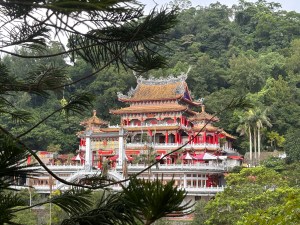
I would allocate a short week for this. As usual, I do not wish on planning everything to the minute from Day 1. I always like to keep some flexibility & spontaneity into my life experiences, follow the Way, as water flows through the rocks, as I would study in the Daodejing, the Taoist book that will accompany me this week (with more than 12000 official temples in Taiwan, mostly Taoist, this alliance sounded appropriate). Here are a few temples that I went through during the trek. What a stunning beauty.

Day 1 “The adventure begins”

Start Point: Guandu Station 8:30am

Goal: Section 1 & 2 for a distance of 15.5km (I would follow the GPX of AllTrails App for this one)

Elevation D+: 1256m

Duration: Around 4 hours

Temperature: A scorching 28 to 35 degrees

Equipment: Eiger Backpack 10kg, clothes + 1.5L of water with electrolytes + 10 gels (unused gels, water fully used)

End Point : Xiaoyoukeng Visitor Center

Night: A few bus stop down the road to Check Inn Select Taipei Yangminshan

Feedback: From far the hardest day of the four, I would realise that only later in the trek. My legs being not used to training with the 10kg backpack, I definitely felt it in my quadriceps. Luckily I would directly head to the hot bath to relax the muscles in the afternoon right after check in & planning Day 2.

Day 2 “Focused”

Start Point: Xiaoyoukeng Service Center (few bus stop 108) 9:40am

Goal: Section 3 & half of Section 4 for a distance of 21km (I would follow the GPX of AllTrails App for this one)

Elevation D+: 750m

Duration: Around 5 hours

Temperature: A scorching 28 to 35 degrees

Equipment: Eiger Backpack 10kg, clothes + 1.5L of water with electrolytes + 10 gels (unused gels, water fully used)

End Point : Dahu Park

Night: Koos Hotel Dahu

Feedback: Unexpected start in the active volcanic area of the park. Tired legs, but warmed up on the way.

Day 3 “Cruising”

Start Point: Dahu Park

Goal: 2nd half of Section 4 then Section 6 & 7  for a distance of 35km (I would follow the GPX of Google Maps for this one)

Elevation D+: 750m

Duration: Around 7 hours

Temperature: A scorching 28 to 35 degrees

Equipment: Eiger Backpack 10kg, clothes + 1.5L of water with electrolytes + 10 gels (unused gels, water fully used)

End Point : Inn Stone Motel

Night: Inn Stone Motel

Feedback: I was quite familiar with this part as I had already explored parts of this trails, especially Section 6. Then Section 7, which is in the Strawberries and Tea farm area was such a lovely place to walk around!! Definitely a much more relaxed mood as this is a more popular part of the trek with more locals & tourists together coming for tea time with stunning views of the city.

Day 4 “The finish”

Start Point: Inn Stone Motel

Goal: Section 8 along the Tamsui River to close the loop

Elevation D+: 35m

Duration: Around 7 hours

Temperature: A scorching 28 to 35 degrees

Equipment: Eiger Backpack 10kg, clothes + 1.5L of water with electrolytes + 10 gels (2 gels used every 7,5km of the running part, water fully used)

End Point : Guandu Station

Night: Rido Hotel Taipei

Feedback: I decided to start walking with backpack for the first 11km, then take a few bus stops to my hotel to drop it off, and finish the last 24km running. And it was hard! Sooooooooooo hot! Plus probably the fatigue of the last 3 days. I expected it. What a struggle to finish the last 10km. I decided to stop every 3.5km in the shade for a water break and gel. As well I decided to play with the watch a bit and close the loop at 100km for 20 hours, which would require to finish at pace 6min/km for the last 15km. Which I would usually do quite easily, but that time was different, The heat was my enemy. But anyway, what to do, of course I was going to close it. There is no there way. Focus, disciplined, committed to the goal I had fix for myself. I finally close the show! at 100km for 20hrs at Guandu Station, stop for a fresh watermelon juice, sat to enjoy the accomplishment, drank, drank and drank. And that was it. I made it. What a pleasure one more time! MRT back to Rido Hotel for recovery time

Day 5 “Soaking in at 101”

I booked myself a coffee time at Simple Kaffa Sola, on the 88th floor of 101 tower, that I had admired for the last 4 days from all angles. What a better place to contemplate what I had just accomplished, the beauty of the surroundings mountains. I was paying respect, in a way..

Thank you Taipei! To the next one..


Posted on

Focus On Carbohydrates – Types, effects, intake requirements & more

Image 12-10-23 at 4.58 PM.jpeg

What are Carbs for:

  1. Protect muscle mass (proteins) from being burn during exercise
  2. Provide energy

Which Carbs to prioritise & why:

Complex Carbs (or starch) are generally considered healthier for several reasons:

  • Slower digestion & steady energy
  • Fiber content 
  • Nutrient density
  • Satiety 
  • Lower Glycemic Index
  • Reduced risk of chronic diseases 

Glycemic Index of Foods

Image 12-10-23 at 5.51 PM.jpeg

Complex Carbs to incorporate into your diet:

  1. Whole grains 
  2. Legumes 🫘 
  3. Veggies 🥦 
  4. Whole wheat bread 🍞 
  5. Fruits 🍎
  6. Oatmeal 🥣 
  7. Brown/Black rice
  8. Barley 
  9. Whole wheat pasta 🍝 
  10. Buckwheat

Carbs Recommended Dietary Allowance:

  • 45 to 65% of total daily calories.
  • Reduce to 25 to 40% for weight loss program.

Top 5 countries with high-carbs diets:

  • China 🇨🇳 (rice,noodles..)
  • India 🇮🇳 (rice,wheat,lentils..)
  • Indonesia 🇮🇩 (rice,noodles,starchy veggies..)
  • Japan 🇯🇵 (Various rice..)
  • Italy 🇮🇹 (Pasta, bread-based products..)

So, what is the place of rice in a healthy diet?

Rice can be part of a healthy diet & can contribute to weight control, depending of several factors:

  • Portion size 🍚 
  • Type of rice (brown,black better than white)
  • Preparation method (steam or boil without oil & better)
  • Balanced diet (add lean proteins, healthy fats & veggies)

Being mindful of your carbohydrate intake is crucial for maintaining a healthy diet. Pay attention to portion sizes, choose complex carbohydrates, and consider how different types of carbs affect your energy levels and overall health. Always remember that nutrition & exercise go hand to hand 😉

Sign up for BODY+!

You will be provided with tailored coaching based on your individual needs and goals.

IMG_6577.jpeg

Posted on

Focus on Calories

Focus on Calories

Image 2-10-23 at 9.40 AM.jpeg

Estimated Calorie Needs by age,gender & physical activity level

WHAT IS A CALORIE ?

A calorie (or kilocalorie to be exact) is the amount of heat required to raise the temperature of 1 kg of water to 1 degree Celsius.

HOW IS YOUR ENERGY USED or WHAT BURNS CALORIES ?

  1. Metabolic & physical body process (what your body needs to function at rest) —> Resting Calories
  2. Digestion: Carbs & Proteins takes more energy to digest than Fats
  3. Physical activity —> Heart Rate 🆙
  4. Growth: Cells renewal 

HOW YOU CAN BURN CALORIES ?

First note that Aerobics (activities using Oxygen as fuel) burns more Calories than Weight Training.

  1. Commute walking or using stairs! This doesn’t require to lock an additional hour of exercise & will bring you where you needed to go anyway, play music, listen to podcast, make it fun 🎵 😀
  2. Stand up more🧍🏽‍♀️🧍🏼
  3. Include physical activities at gatherings (Darts, Volleyball, Molkki…)🤩 
  4. Take a short walk sunrise time to start the day & sunset time to close the day 🌇 
  5. Incorporate HIIT (High Intensity Interval Training) into your walk/run/workouts 🏃🏻‍♀️🏃🏻‍♂️

When you eat food, you are consuming calories in the form of energy.

Energy that your body can use for 3 different purposes : burning it, storing it, absorbing it.

You can yourself, what will I use these calories for ? And start to plan your food intake according to your daily needs. 

Lazy day ? Eat little!

Moderate day ? Eat reasonably!

Active day ? Eat enough!

Sign up for BODY+!

You will be provided with tailored coaching based on your individual needs and goals.

IMG_6577.jpeg

http://www.coaching-by-olea.com

Posted on

Did you get your daily dose of sunlight this morning ?

Sunlight Health Benefits

  • Vitamin D Boost
  • Regulates the circadian rhythm
  • Improves Mood
  • Increases Alertness
  • Lowers risks of chronic diseases

What you need to do :

– Get out in the sun within the first hour after waking up

– Spend 20 to 40 minutes exposed

– Do not wear glasses or visors

– Get direct light

– Use sunscreen to protect your skin

Get your sunlight exposure by taking a walk, exercising or simply enjoy your breakfast outdoors!

Posted on

Trail Running, how to get my body prepared ?

When it comes to running, the common vision is a flat steady run on the road, and let’s be honest, this is what most people start doing and keep doing as long as they new to the activity.

Then, usually after years of practice, a kind of boredom starts to appear and when it comes to find a new challenge, runners are going to look after new path, after something different, and this is when trail running comes.

Every time you are going to change path, every time the effort is going to be different, and this for many reasons :

  • Trail comes with elevation : The positive and negative elevation is never going to be the same
  • The surface is going to change depending of the trail, and usually in the same trail itself
  • The temperature is going to change, it might be alright down the hill, but top of the mountain is another story
  • It is likely that you are going to cross very few people, so count on yourself only for that extra motivation
  • And most importantly, your legs are going to respond a different way according to the route


So what should you think about going for a trail that you do not necessarily need on road ?

  1. Get some good trail running shoes. It might be muddy, rocky, wet, dusty…
  2. Get more water and more energetic fluids (sodium based, electrolytes…), you never really know how long exactly it is going to take to finish
  3. Get a GPS watch (or APP). depending of where you are. No indication in the nature, there is different path and it is likely that you are going to get lost if you are on a discovery run and don’t know where to go
  4. Get some blisters pads, your feet are moving in the shoes a lot more than on flat
  5. And let some close people know where your head for, it could help in a worst case scenario


Now, from a physically stand point, how to I get prepared for this kind of effort ?

Well, it definitely demands a good ascensional but also it works a lot more on your muscles.

So do not get lazy on your overall strength training program and add at least one or two session of dynamic legs (lunges, squats, squats jump, bulgarian squat) to get your legs prepared.

Also, one session of stairs training is great to work on your explosive strength. There is plenty of different exercices that you can do, like 1:1 stair, 1:2 speed, 1:3 lunges with no jump…

In addition to that, one session of static legs & upper body (chair, plank, abs, arms).

Add these sessions to your weekly specific run & long run and you will be all set for performing as you wish on all kind of trail path.


LG


Where to practice trail running in Singapore :

  • Bukit Timah Hill
  • Mac Ritchie
  • Bukit Timah Nature Reserve/Mandai Rd
  • Lower/Upper Piece Reservoir
  • Fort Canning

We organise all year long some trail running sessions in Singapore + preparation for races in Asia Pacific. To know more about it, contact Loic on WhatsApp +65 9014 6409 or visit http://www.a4sports.com


Posted on

Tennis : What does it take to turn professional ? TOP 5 NEEDED!

If there is one long and tricky road to get one job in this world, this is definitely the one leading to professional level of any sport.

But in tennis, what does it really take ?

From what I have experienced over the years coaching players in many different countries, there is plenty of different parameters.

  1. PASSION : First, and that will probably seems logic, or even ridiculous to you, you need to truly love the sport.

Yes! To get through all the challenges and steps that tennis requires to climb the ranking, you need to love that more than anything else in your life, because you are going to spend a lot, a lot of time on court (and later far from your close ones) to practice your skills, and the frustration that comes with. The sport is so technical, that your level is going to vary from day to day.

You know, that shot that you are mastering so well, and allows you to win the points, and matches ? Well, that shot is not going to be as efficient all the time. This is going to depend on the environment, of your fitness shape of the day, of your opponent’s game, of your current state of mind… what brings me to the second most important parameter, your mental strenght.

     2. MENTAL :

In Tennis, more than in any other sports, you lose a lot. You lose points, you lose games, you lose matches, and in 99% of the time, you lose the tournament you are involved in.
So if you are not ready to fail, you are going to have a hard time to get back on track the day after.

This is part of your way to the top though, failing, analysing the match, being back to training harder to fix what went wrong. So do not forget : it is OKAY to lose!

Being a winner is a real mental skill, you never give up and are always willing after failure to work harder than before.


3. COACH :

How to know why you lost ? And also why you won ? Well, to have a real vision of what strenght you must capitalize on and what weaknesses to work on, you need a specialist to look after you constantly, when you train, when you play, and even outside the court. No one else than a good and commited coach will be able to do that for you. And later on, a good team around (Fitness trainer, mental trainer, physiotherapist…)
And the earlier you have that commited team around you, the better it is.


4. MONEY :

Unfortunately, tennis is not accessible to everyone (yet). First, you need to buy equipment, and have access to the court. Then pay for a coach, and a team (although you can have a family member taking care of it until a certain level). And later on, pay for tournaments, and then travel expenses related to it.
In most of the national associations, it will be taken care of (If you are in the top 4 players of your age category). But if your results are not as good as expected, they will bet on someone else. At that point, everything is not lost, you’ll just have to find your own structure, but that will be more costly.


5. BODY : This one is in 5th position, while it could be in any others. Injuries are a real career killer.

It does depend of your lifestyle & physical sollicitation but also of genetic factors.

Having the best doctors plays its part in the recovery process and can make big changes in how your career is going to play out.


As you might already know, the top junior players are not always the ones we find at the top of the ATP/WTA ranking.

Loic GIACOMAZZO

Private Tennis Coach

http://www.gsh-9.com

http://www.a4sports.com

Posted on

Does fatigue come from the muscles or the brain ?

Did you ever wonder why you were feeling more tired in certain conditions than others, knowing that you had the same amount of rest, or sometimes more, than usual ?

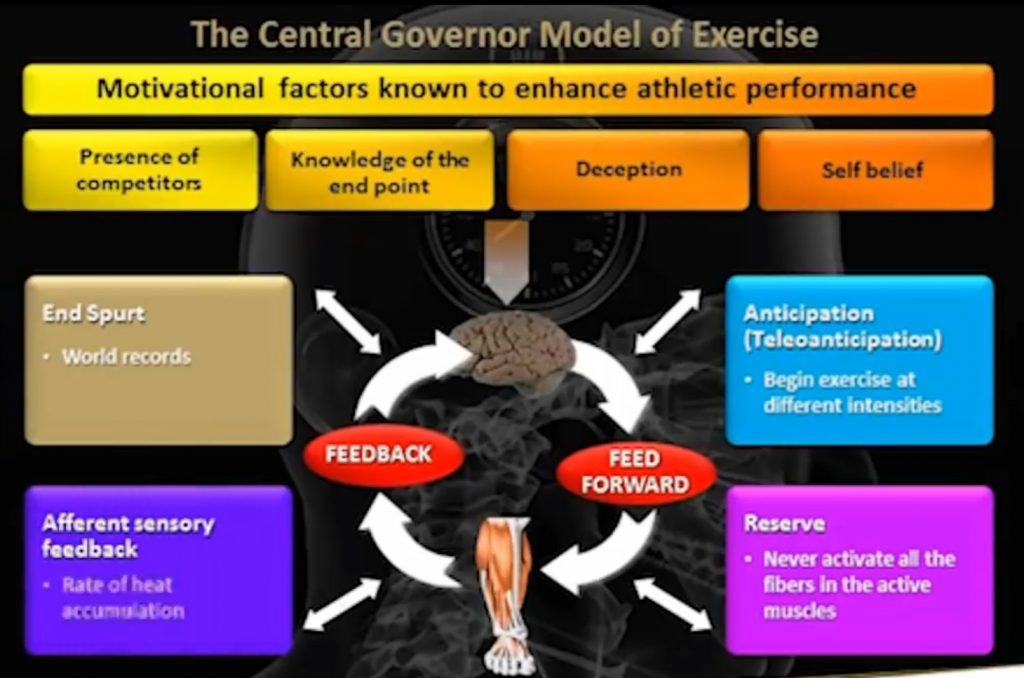
Let’s have a look at The Central Governor Model of Exercise, proposed by Tim Noakes, who shows, after having studying a large amount of world-level champions, few interesting characteristics .

The fatigue would come from the brain, who send signals to the muscles, according to some (psychologic & environmental) factors. The muscles then process the information and send a feedback to the brain. Depending of external factors, you might feel a different level of fatigue, who is not correlated to the actual physical fatigue of your muscles.

Posted on

Why doing HIIT instead of Long Distance Steady Cardio ?

Well, depending of your goal, every type of run/workout has pros and cons.

A long run (1 to 3 hours) is going to improve your cardiovascular abilities, ventilatory capacities, strength your muscles and improve your stamina. They also help the body to get used to burning fat rather than glycogen. However, the body regulates himself at a low intensity metabolism in order to be able to finish that long exhausting run.

HIIT incorporates recovery time, which means allows your body to get back to low intensity in order to restart again at high intensity speed. So working at higher intensity means increasing the needs of energy by using all available stocks (ATP, PCr, sugar, fat…).

You need to know that your body is also burning calories as long as 2 hours after an intense workout. So is your main goal is to lose fat, do not eat anything during the two hours post-workout !

We recommend to practice both HIIT workouts and some cardio training at moderate intensity to enjoy the full benefits of both options.

HIIT Workout sessions are organised in Singapore by GSH & A4 Sports at the 100PLUS Promenade @KallangNationalStadium every Tuesdays, Thursdays and Sundays morning.